A truly happy plant is one that thrives over time. It settles into its location, grows into the space around it, and returns year after year looking as though it belongs exactly where it is. Much of that happiness comes down to two basic things: the right amount of sunlight and the right amount of space.
Not all of the plants in my yard have achieved happy-plant status, for sure. A few have made it very clear that I chose the wrong place for them. Some are hanging on for dear life. Some survive but don’t ever really flourish. The row of Rose of Sharon trees along the side of my yard has proved to be different.
These are happy plants.
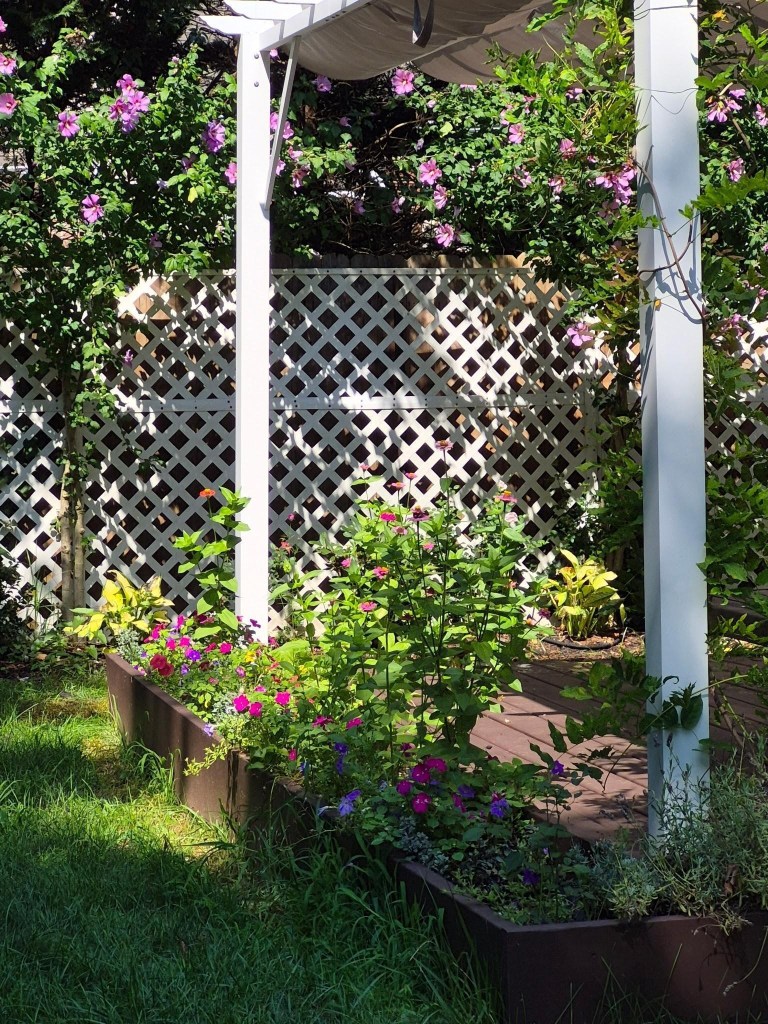
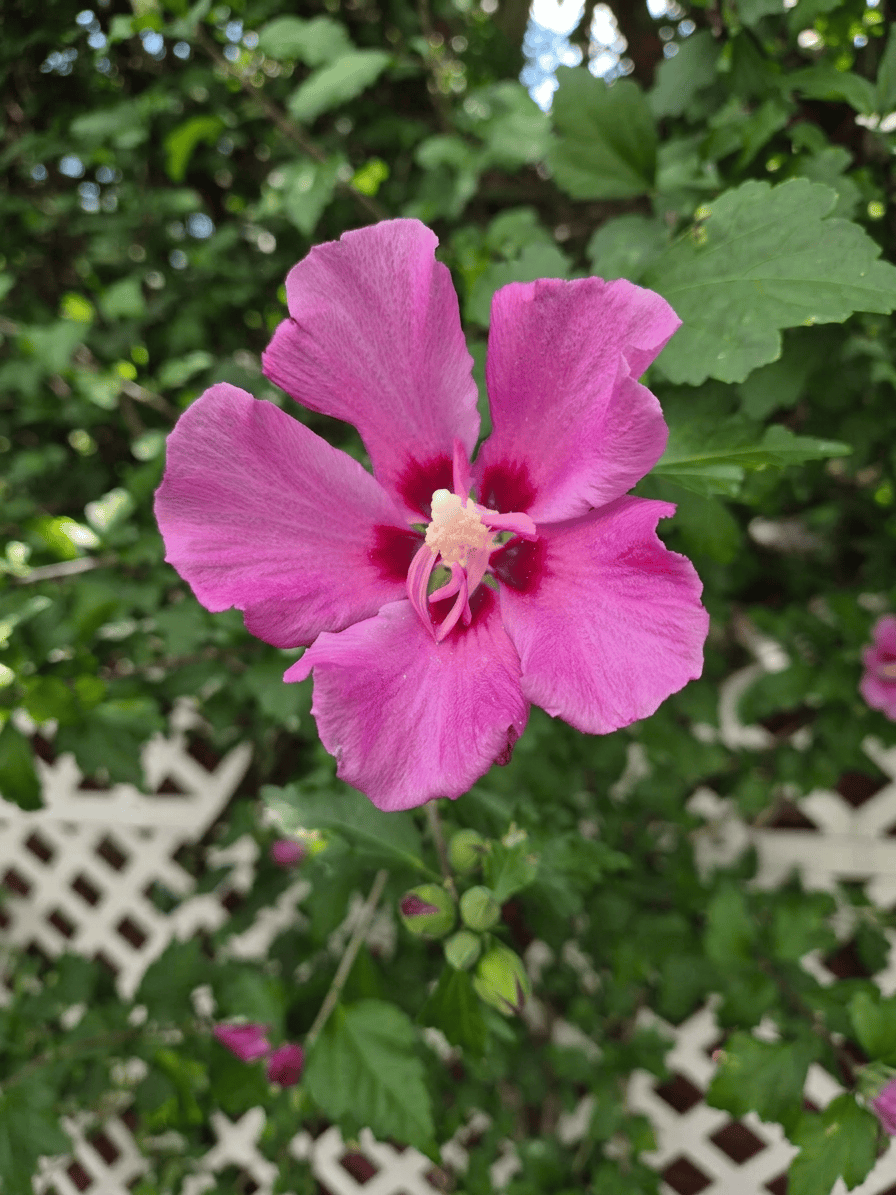
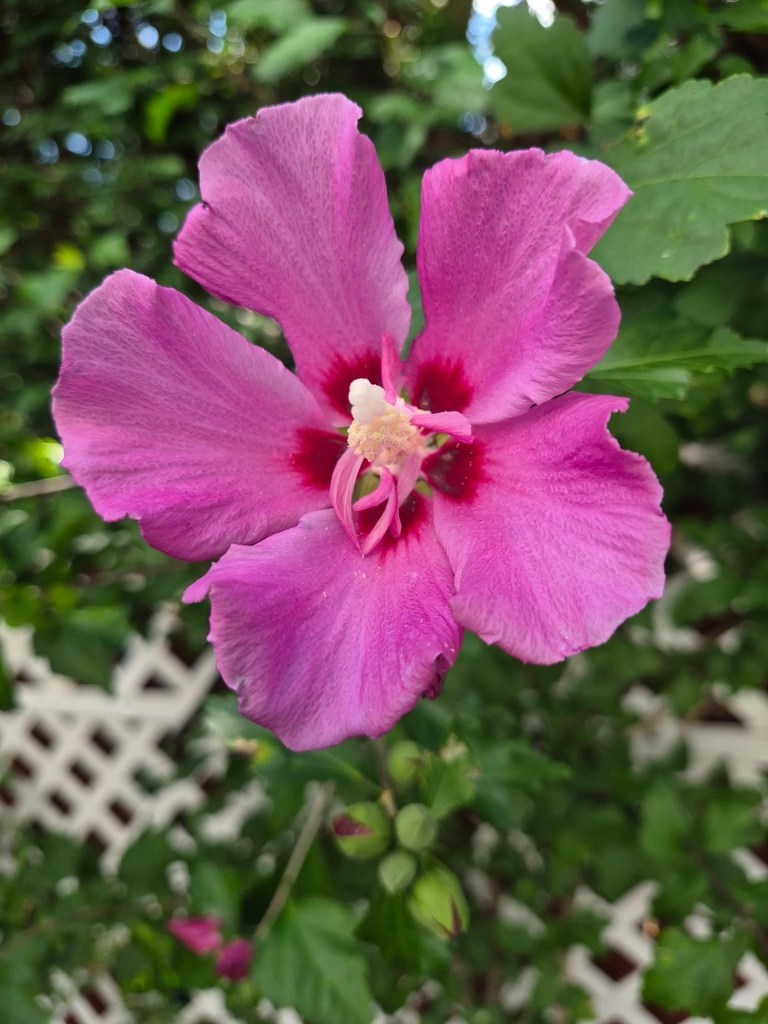
I planted the trees more than fifteen years ago, and they have reliably bloomed every season since. In winter, they are bare and almost lifeless-looking. In spring, the green buds appear, and by late May, the branches are covered with leaves. The annual show begins in July, when pink-purple flowers bloom against rich green foliage.
When I first planted the row, it received more sun than it does today. The evergreens behind the fence grew taller, and as the maple in a neighboring yard stretched higher, the Rose of Sharon received less sunlight. Shaded later in the day, the yard is no longer full sun but part sun.
The trees have adjusted to my ever-changing garden.
The evergreen pines behind them challenged the Rose of Sharon, but the trees handled that competition well by finding space. They leaned forward over time and grabbed more sun. I pruned them into rounded shapes and kept the trunks clear of branches, which prevented them from swallowing up this narrow side yard.
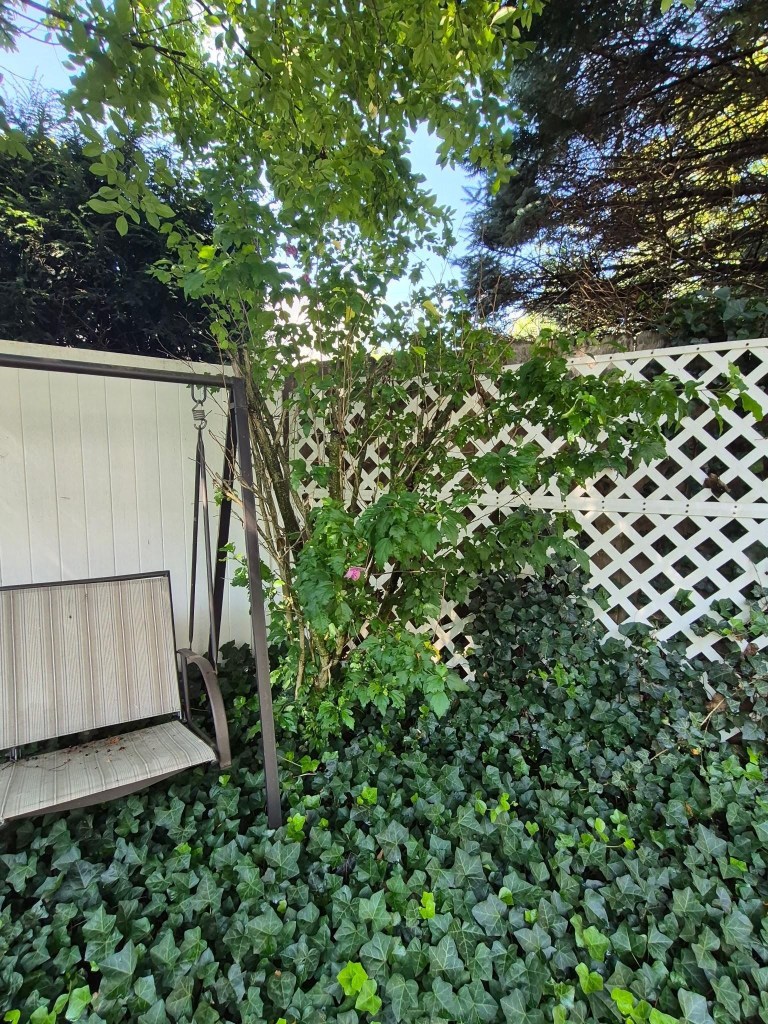
The Rose of Sharon that I planted in the corner of the yard at about the same time tells a very different story. This plant is alive, but I would not call it happy. Each year, it produces fewer leaves. The branches are thinner and barer, and the few flowers that appear are small.
The plant is surviving, but it is far from thriving.
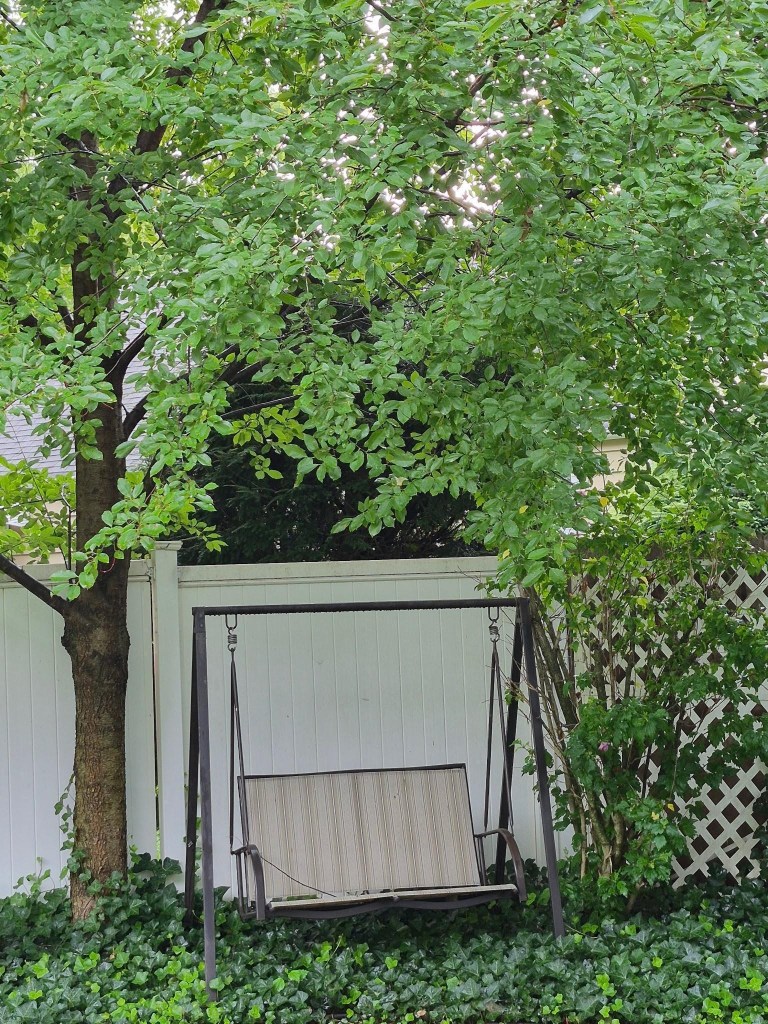
Ivy fills the ground around it, stealing its water and nutrients; the neighboring black cherry has grown dramatically larger. Over the last decade, the black cherry has spread upward and outward, leaving the Rose of Sharon with less light and less open space around it. Its expanding canopy and root system now occupy so much of the surrounding space that the plant is suffering.
I am thinking about moving this tree to another location in the yard next spring. It is not a young plant, however, and the last Rose of Sharon that I moved didn’t survive. If I decide to find it a better home next year, I’ll make a point to dig up this plant while it is dormant.
I’m hoping that my New Dawn climbing roses will become as happy as the sharons. The health of the New Dawn roses that I ordered online exceeded my expectations. I planted two of them this year in different locations: one in a sunny flower box and another in that part-sun side yard. So far, they are putting out new growth, reaching toward their supports, and beginning to occupy the spaces I imagined for them.
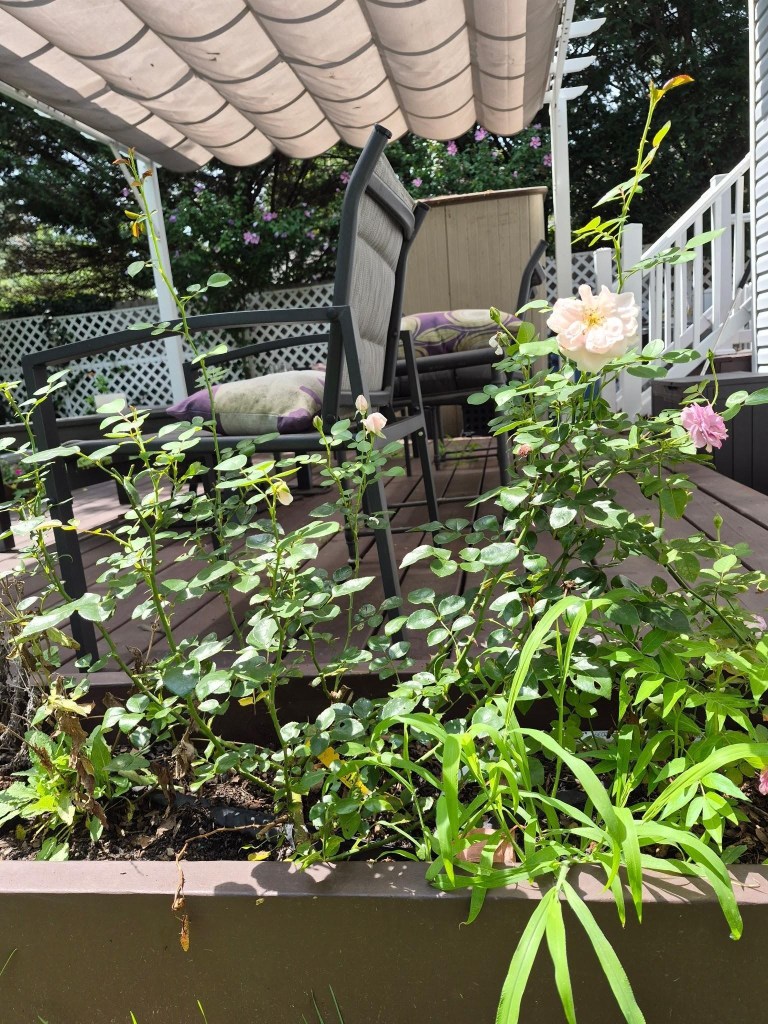
Of course, one growing season does not tell me much. A plant can look wonderful in August and still prove to have problems the following year. The real test is time. Does the light remain sufficient? Are neighboring plants leaving it enough room? How will it do five, ten, or fifteen years from now?
Are your plants receiving the right amount of light and space in your yard? Do they have the same amount of light and space they had when you first planted them?
If you have a plant that is thriving, struggling, or simply puzzling you, email me a picture at annaliesedegrassy@gmail.com. Let me know if you’d like to be featured in my next blog. If you’d like to follow along with this gardening journal, subscribe to Anchored & Aimless, explore more Design posts, or view all posts.
Thank you for reading.
Home | Start Here | Design | Maintenance | Challenges | Upgrades | View All Posts | Subscribe
Follow Anchored & Aimless: YouTube | Instagram
All garden photographs in this post are by the author, Annaliese Degrassey


Leave a comment